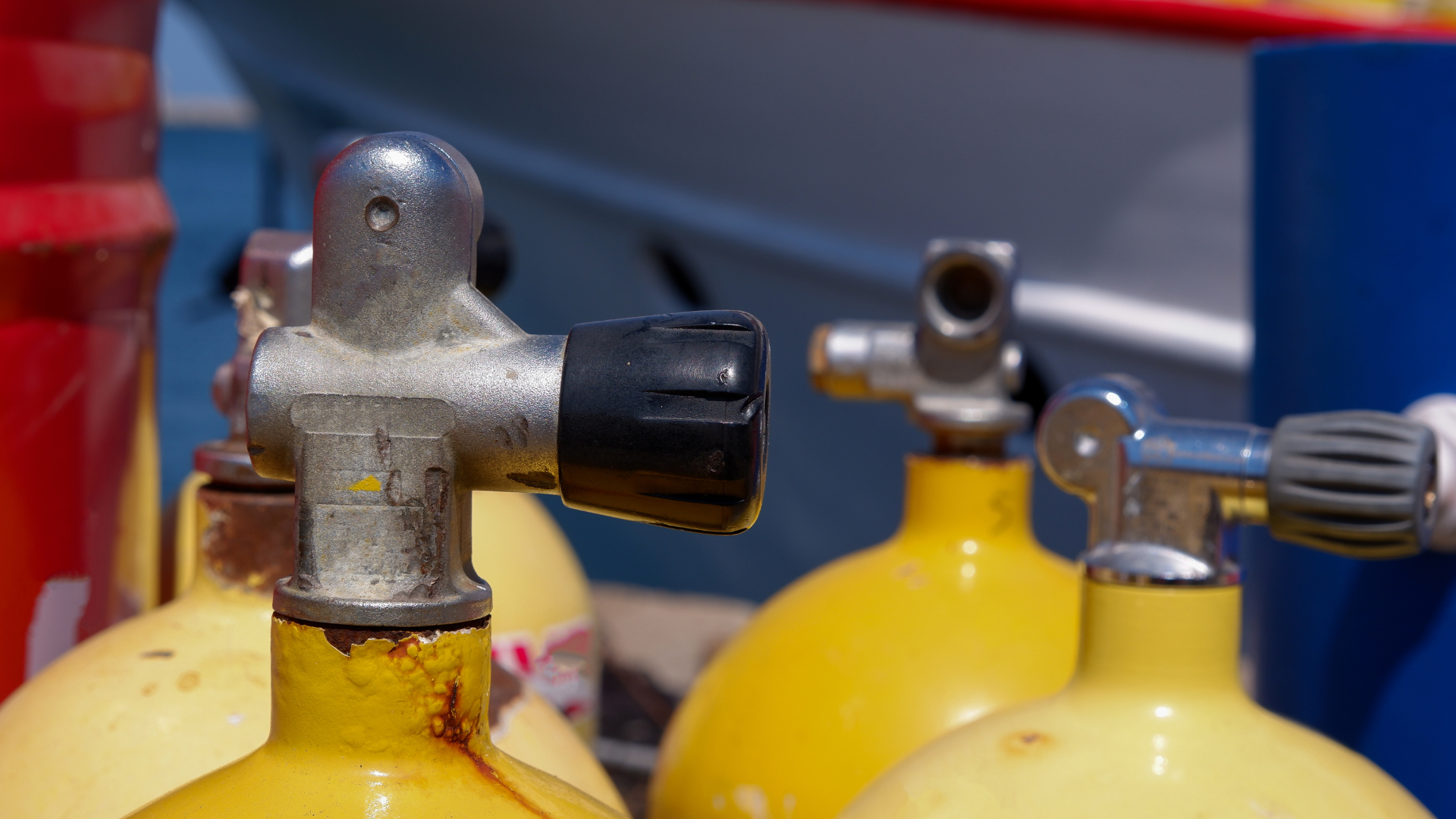
Fundamentals of Compressed Gas Safety
Compressed gases are essential across numerous industries—from manufacturing and healthcare to food processing and research laboratories. However, these gases present serious hazards if not handled, stored, or used properly. The Compressed Gas Association (CGA) develops consensus-based safety standards and provides resources to help minimize risk and enhance workplace safety.
The Role of CGA in Compressed Gas Safety
Since 1913, CGA has led the development of safety standards and best practices for the handling, storage, and transportation of compressed gases. These standards are cited by OSHA, DOT, EPA, NFPA, and other regulatory agencies, underscoring CGA’s credibility and influence.
CGA’s library includes over 350 publications, including standards, safety alerts, eLearning modules, posters, and hazard-specific information.
Common Hazards of Compressed Gases
- Pressure: Sudden release can turn cylinders into projectiles.
- Asphyxiation: Inert gases displace oxygen in confined spaces.
- Flammability: Gases like hydrogen or acetylene can ignite easily.
- Toxicity: Some gases are harmful or fatal if inhaled.
- Cryogenic burns: Liquid gases can cause frostbite or cold burns.
Key Safety Principles
- Secure cylinders upright and away from heat sources.
- Use the correct regulator and outlet connections.
- Never modify fittings or cylinders.
- Perform leak checks using approved methods.
- Separate and label full and empty cylinders.
Establishing a CGA-Aligned Safety Program
A comprehensive program should:
- Follow CGA standards and relevant regulations.
- Provide regular training with CGA materials.
- Include routine inspections and maintenance.
- Define clear emergency procedures.