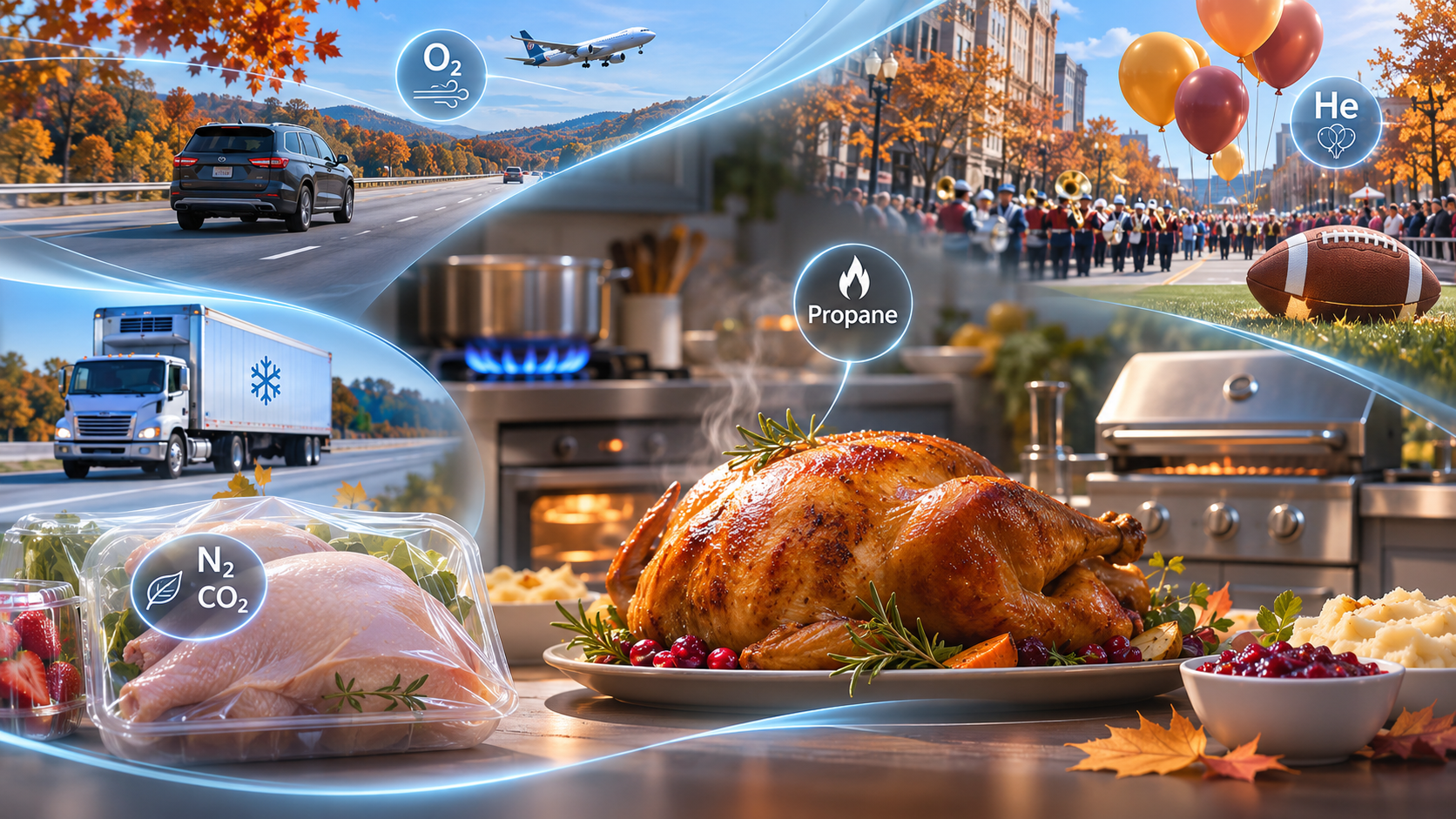
Thanksgiving is a holiday built around family, food, travel, and tradition. From the moment we hit the road to visit loved ones to the last slice of pumpkin pie, compressed gases play a surprisingly important role in making the holiday possible. Although they often go unnoticed, gases such as carbon dioxide, nitrogen, oxygen, propane, and helium contribute to nearly every part of the Thanksgiving holiday. Whether they are helping preserve the turkey, cook the meal, keep food fresh during transportation, or entertaining us, these gases are working behind the scenes to make Thanksgiving a success.
Hitting the Road: Gases That Keep Us Moving
For millions of Americans, Thanksgiving begins with traveling to spend time with family and friends. Whether flying or driving, compressed gases play an important role in keeping people and transportation systems moving safely and efficiently.
In aviation, compressed gases are essential throughout aircraft manufacturing, maintenance, and operation. Nitrogen is commonly used to pressurize aircraft tires and hydraulic systems, as well as to support applications that help reduce fire risks in fuel tanks. Oxygen is critical for onboard passenger and crew safety, supplying emergency oxygen systems that provide breathable air if cabin pressure is lost. Argon and other specialty gases also support aircraft manufacturing and repair through welding and other processes.
Beyond aviation, industrial gases support the broader transportation industry, including automotive manufacturing and maintenance. Nitrogen is used in vehicle tire inflation to help maintain consistent pressure, while argon and other shielding gases play an important role in welding and repairing automotive components. Oxygen and acetylene are also commonly used in automotive repair and metal fabrication, helping technicians cut, join, and maintain the metal components found in vehicles.
Preparing the Feast: Gases in the Kitchen
Once everyone arrives, the real Thanksgiving excitement begins: preparing the meal. While ovens, stovetops, and grills take center stage, several gases help make the cooking process possible.
Natural gas and propane are two of the most recognizable fuels used in Thanksgiving cooking. Natural gas powers many household ovens and stovetops, while propane is commonly used in outdoor grills and turkey fryers. These fuels provide reliable heat for roasting vegetables, baking pies, and preparing the main course. For families who enjoy cooking outdoors, propane-powered equipment can be particularly useful for freeing up valuable kitchen space.
Compressed gases also have a role in the preparation and presentation of food. Nitrogen is used in certain food-processing applications, including flash freezing, which rapidly lowers food temperatures and helps preserve texture and quality. Liquid nitrogen, a cryogenic form of nitrogen, is also used by some chefs to create frozen desserts and other specialty dishes.
Carbon dioxide is another important gas in the kitchen. It is responsible for the carbonation in sparkling water and soft drinks that frequently accompany holiday meals. It can also be used in food processing and beverage dispensing systems, helping deliver everything from fizzy drinks to draft beverages.
Keeping Food Fresh: Preservation and Transportation
Thanksgiving meals often involve much more than what is prepared at home. Turkeys, vegetables, dairy products, baked goods, and other ingredients travel through extensive supply chains before reaching grocery stores and family kitchens. Compressed and cryogenic gases are essential to keeping many of these foods fresh along the way.
Nitrogen and carbon dioxide are widely used in modified atmosphere packaging (MAP), a food preservation technique that replaces or adjusts the air inside food packaging. Nitrogen helps displace oxygen, reducing oxidation and helping prevent foods from becoming stale. Carbon dioxide can slow the growth of certain bacteria and molds, extending the shelf life of products such as meats, cheeses, and prepared foods.
These gases are especially useful for packaging fresh poultry, including the Thanksgiving turkey. By carefully controlling the atmosphere inside packaging, food manufacturers can help maintain product quality and reduce spoilage during storage and transportation.
Refrigerated transportation is another critical part of the process. Liquid nitrogen and liquid carbon dioxide can be used in specialized cooling applications to maintain low temperatures during food transportation. These cryogenic gases absorb heat as they change phase, providing rapid and effective cooling. Alongside conventional refrigeration systems, they help ensure that perishable Thanksgiving ingredients arrive at grocery stores and homes in safe, fresh condition.
The Entertainment: Gases Beyond the Dinner Table
Thanksgiving is not just about food. It is also a time for football, parades, decorations, and celebrations. Even these traditions have connections to industrial gases.
For many families, Thanksgiving Day means watching football. Compressed air is used in various sports-related applications, including maintaining the proper inflation of footballs, as a properly inflated ball is essential for consistent handling during the game. In addition, many players utilize portable compressed oxygen canisters and oxygen masks throughout the game to help them recover breath after heavy exertion.
For those who enjoy the Macy’s Thanksgiving Day Parade, helium deserves an obvious special mention. This nonflammable, lighter-than-air gas makes the parade’s iconic giant character balloons float above the streets of New York City. Without helium, these enormous balloons would not be able to soar overhead and delight millions of spectators every year.
Helium is also used in smaller celebration balloons and decorative displays, making it a familiar part of holiday festivities. Beyond entertainment, it has important applications in scientific research, medical technology, and industrial leak detection.
A Holiday Powered by More Than Tradition
Thanksgiving may be best known for its turkey, family gatherings, and football, but compressed gases are quietly involved in many of the activities that make the holiday special. Nitrogen helps preserve food and maintain tire pressure, carbon dioxide keeps beverages bubbly and extends food shelf life, propane and natural gas provide cooking heat, and helium brings larger-than-life parade balloons to the sky.
These gases demonstrate just how closely compressed gas technology is connected to everyday life. From the farm and food-processing facility to the grocery store, kitchen, highway, and parade route, they help make modern Thanksgiving traditions possible.
So, as you gather around the table this Thanksgiving, take a moment to appreciate the science behind the celebration. There is a lot more than good food and family tradition keeping this holiday running smoothly!


